
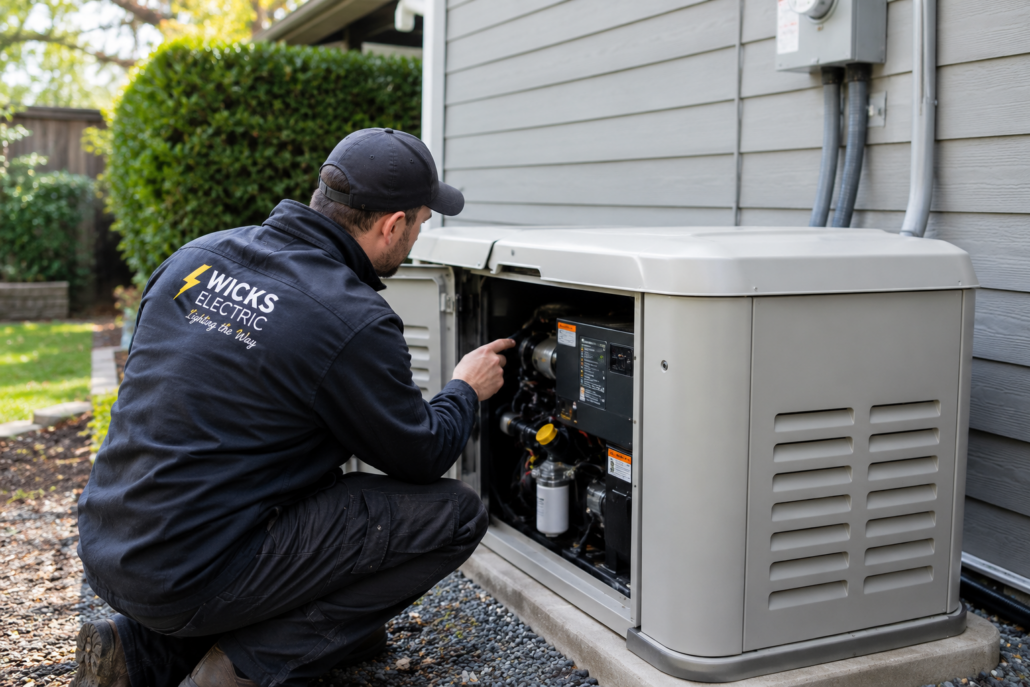
Is Your Home Ready for a Power Outage? A Homeowner’s Guide to Backup Generator Installation
A sudden power outage can turn an ordinary day into a stressful experience. From losing access to essential appliances to dealing with a cold home during severe weather, an unexpected interruption in electricity can affect your household in more ways than you might expect.
For homeowners in Vancouver and the Lower Mainland, having a reliable backup power solution can make a significant difference. A professionally installed standby generator helps keep essential systems operating when utility power fails, providing greater comfort, convenience, and peace of mind.
At Wicks Electric, we help homeowners understand their electrical needs and explore practical solutions to keep their homes powered when it matters most.
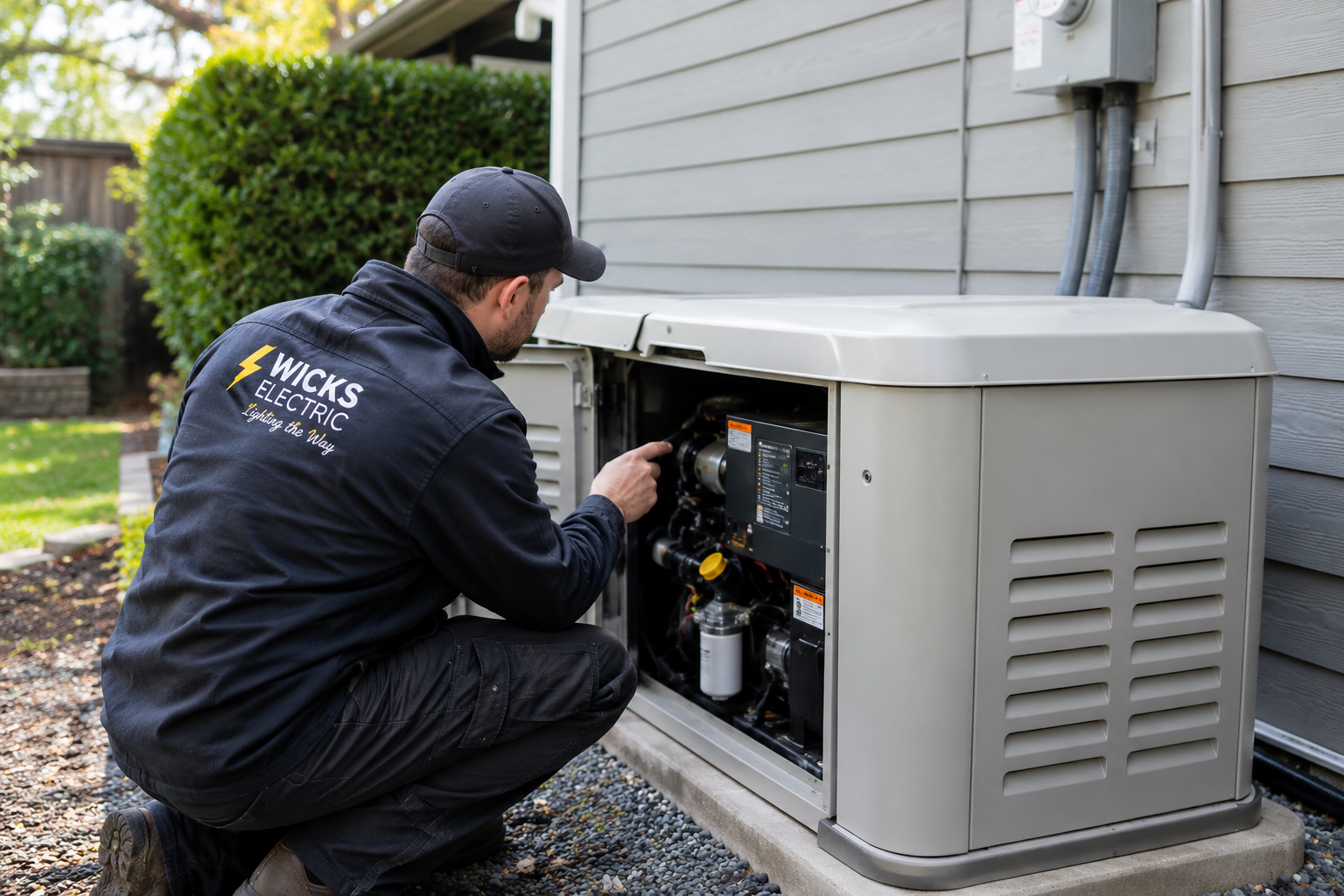
How Does a Standby Home Generator Work?
A standby generator is a permanently installed unit, typically located outdoors, that supplies backup electricity when your regular utility power is interrupted.
Unlike portable generators, standby systems are connected to your home’s electrical system through properly installed transfer equipment. When an outage occurs, an automatic transfer switch can detect the loss of utility power and transfer the selected electrical loads to the generator.
When utility power returns, the system transfers the loads back to the normal supply and shuts down according to the manufacturer’s operating sequence.
Depending on the equipment and configuration, this process can happen automatically without requiring you to start the generator manually.
Which Home Appliances Can a Generator Power?
One of the first questions homeowners ask is whether a standby generator can power their entire home.
The answer depends on the generator’s capacity, your home’s electrical demand, and the circuits included in the backup system.
Some homeowners choose to keep only essential equipment running, while others invest in a larger system designed to support more of the home.
Common priorities include:
- Refrigerators and freezers: Help keep food cold during an outage.
- Heating systems: Maintain indoor comfort when compatible heating equipment is included.
- Lighting and electrical outlets: Keep essential areas illuminated and provide power for everyday devices.
- Internet and home office equipment: Help maintain connectivity and support remote work.
- Security systems: Keep compatible alarms and other security equipment operating.
- Sump pumps: Help manage water accumulation where applicable.
- Garage doors: Maintain access when the required opener circuit is backed up.
It’s important to remember that not every generator can operate every appliance simultaneously. Large electrical loads, including electric ranges, electric water heaters, central air conditioning, and electric vehicle chargers, can significantly affect generator sizing.
A professional load assessment helps determine which equipment can operate together safely and reliably.
Standby Generator vs. Portable Generator: Which Is Right for You?
Both options can provide backup electricity, but they serve different needs.
A portable generator may be suitable for occasional use and smaller backup requirements. However, it generally requires manual setup, an appropriate outdoor operating location, and a properly designed connection method.
A standby generator is permanently installed and can provide automatic backup power when paired with compatible transfer equipment. It is often preferred by homeowners who want a more convenient, hands-off solution.
The right choice depends on your budget, expected outage frequency, household electrical demand, available installation space, and desired level of backup coverage.
Important safety note: Fuel-burning generators must never be operated indoors, in garages, or near windows and air intakes where exhaust could enter the home. A generator must never be connected to household wiring through an improvised connection or in a way that can backfeed the utility supply.
What Should You Consider Before Installing a Home Generator?
Choosing a generator involves more than comparing equipment prices. The installation must be designed around your property’s electrical system and the way your household uses electricity.
1. Determine Your Backup Power Requirements
Start by identifying which appliances and systems are most important during an outage. Consider whether you need to maintain basic lighting and refrigeration or operate several larger systems at the same time.
These priorities help determine the appropriate generator capacity.
2. Check Your Existing Electrical Panel
Your electrical panel and available circuit capacity play an important role in planning a generator installation. An electrician can assess the existing distribution system and determine how the backup supply should be integrated.
Depending on the project, panel modifications or other electrical upgrades may be required.
3. Choose an Appropriate Installation Location
Standby generators require suitable outdoor space, adequate ventilation, and compliance with manufacturer clearances and applicable local requirements.
Fuel supply, noise, service access, property boundaries, and proximity to windows and air intakes must also be considered during planning.
4. Understand Transfer Switch Requirements
A transfer switch safely manages the change between utility electricity and generator power. Its configuration depends on the generator system and whether you intend to back up selected circuits or a larger portion of the home.
Proper integration is essential to help prevent unsafe electrical conditions and protect utility workers and your equipment.
5. Plan for Permits and Inspections
Generator installations may require electrical permits, inspections, and coordination with other qualified trades, depending on the equipment and scope of work.
Planning these requirements in advance helps avoid unnecessary delays and ensures the installation is completed in accordance with applicable regulations.
Why Professional Generator Installation Matters
A standby generator becomes part of your home’s electrical infrastructure, so correct installation is essential.
Professional installation involves evaluating electrical loads, selecting compatible equipment, integrating the transfer switch, coordinating required permits, and testing the completed system.
For fuel-powered generators, the fuel supply must also be installed and inspected by appropriately qualified professionals where required.
Once the system is commissioned, homeowners should understand how to monitor the equipment, follow the manufacturer’s maintenance schedule, and arrange periodic servicing.
Routine maintenance and testing help identify potential problems before an outage occurs. A generator that has not been maintained or tested may not perform as expected when you need it.
Prepare Your Home Before the Next Outage
Waiting until the power goes out to consider backup power can leave you with limited options. Planning ahead gives you time to compare systems, establish your priorities, and complete the necessary installation and testing.
Even if a whole-home generator isn’t the right fit for your property, a carefully designed backup power plan can help protect essential household functions.
The key is choosing a solution that meets your needs without paying for more capacity than your home requires.
Reliable Backup Power with Wicks Electric
At Wicks Electric, we understand how important a dependable electrical system is to your home and family. Our team provides professional electrical services throughout Vancouver and the Lower Mainland, helping homeowners evaluate their electrical systems and plan improvements with confidence.
If you’re considering a standby generator, we can help assess your existing electrical setup, discuss your backup power priorities, and determine the electrical work required for your project.
Our focus is on quality workmanship, clear communication, and reliable electrical solutions designed around your home.
Let Wicks Electric Help You Prepare
Don’t wait for the next storm or unexpected outage to think about backup power. Contact Wicks Electric to discuss your home’s electrical requirements and explore your options for a standby generator installation.
Wicks Electric Inc.
Lighting the Way
Phone: 604-765-8439
Email: info@wickselectric.ca
Website: https://www.wickselectric.ca
Helping Vancouver and Lower Mainland homeowners stay prepared with dependable electrical solutions.