
Structured Cabling: Why Your Business Network Depends on Good Wiring
/in Blog/by Marianne BernardoFast internet is important for business, but your internet connection is only one part of the equation. The physical network inside your building plays a major role in how reliably computers, phones, access points, cameras, and other connected equipment communicate.
When network cabling is poorly planned or difficult to manage, even a good internet service can be affected by unnecessary connectivity problems.
For businesses in Vancouver and the Lower Mainland, a properly planned structured cabling system provides an organized foundation for the technology your team depends on every day.
Your Network Starts Behind the Walls
When employees connect to the company network, they usually don’t think about what happens behind the wall.
Data travels through physical cabling connecting workstations, network equipment, wireless access points, security devices, and other technology.
If those connections aren’t properly planned, problems can become difficult to locate.
A structured approach creates a clear pathway between your equipment and network infrastructure, making the system easier to understand and manage.
Why Organized Cabling Matters
A network with cables running randomly between equipment can become difficult to maintain as a business grows.
Organized cabling helps create a cleaner infrastructure where connections can be identified and managed more easily.
This becomes particularly valuable when:
- New employees need additional network connections
- Workstations are moved
- Equipment is replaced
- Network hardware is upgraded
- A business expands into additional areas
- Troubleshooting is required
Instead of trying to trace an unidentified cable through a crowded rack, properly labeled and documented connections make maintenance much more straightforward.
Plan for More Than Today’s Technology
Your business network will likely change over time.
You may add computers, wireless access points, security cameras, conference equipment, phones, or other connected devices.
That’s why structured cabling should be planned with future requirements in mind.
A system designed only around today’s equipment can quickly become restrictive.
Considering potential expansion during the initial installation can give your business more flexibility later.
Different Spaces Have Different Requirements
An office doesn’t have the same cabling requirements as a warehouse or retail environment.
An office may need connections throughout work areas and meeting rooms.
A retail location may need network connections for point-of-sale equipment, displays, and security systems.
A warehouse may require connectivity across a much larger area, including wireless access points and specialized equipment.
Healthcare, education, and other facilities can have their own unique requirements as well.
The cabling plan should therefore be developed around the building and the way the business operates.
Don’t Forget Wireless Networks
Wi-Fi may be wireless from the user’s perspective, but the access points still need a reliable physical connection.
Wireless access points can require network cabling at strategic locations throughout a building.
If those locations aren’t considered during construction or renovation, installing them later may be more difficult and disruptive.
Planning access point connections as part of the structured cabling system helps create a more coordinated network infrastructure.
Security Systems Can Share the Infrastructure
Modern commercial buildings often rely on connected security technology.
Depending on the system, network infrastructure may support equipment such as cameras, access control devices, and other connected security components.
Planning these connections alongside the rest of the cabling can help avoid a collection of separate, poorly organized wiring systems.
It also makes it easier for the project team to understand how different technologies connect throughout the building.
Cable Management Is More Important Than It Looks
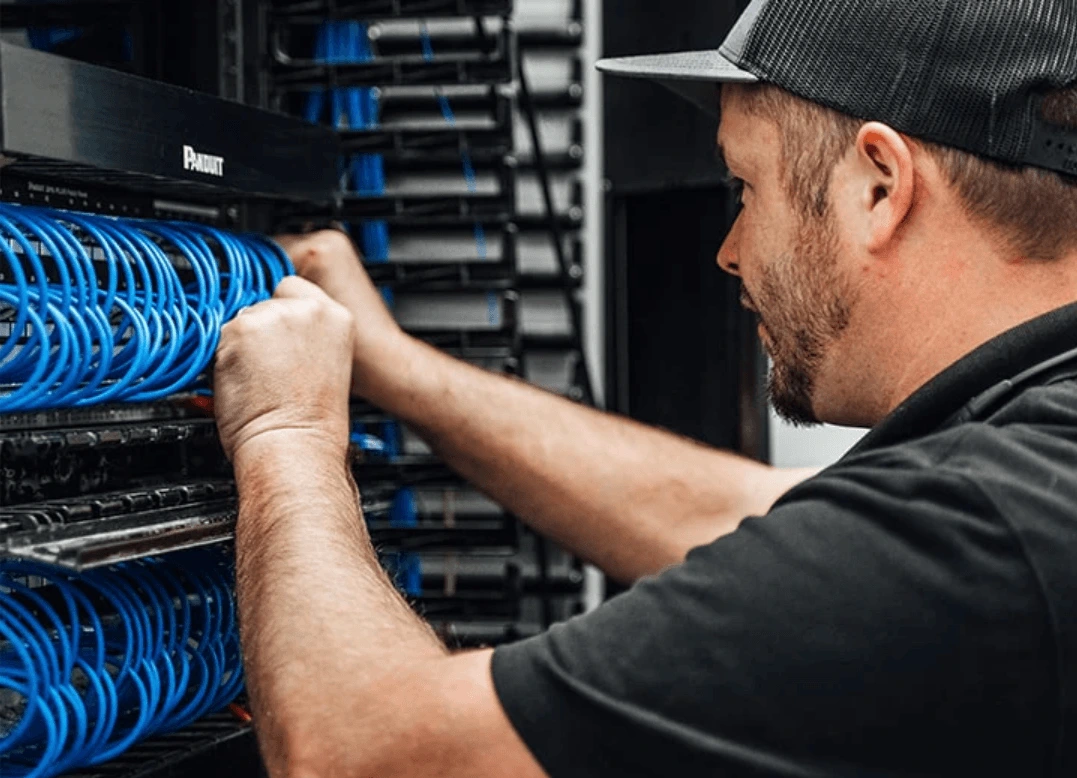
A network rack can quickly become difficult to work with when cables aren’t routed and identified properly.
Good cable management helps keep equipment accessible and connections easier to trace.
Proper labeling and documentation can also save valuable time when troubleshooting or making future changes.
For a growing business, that organization can become increasingly important as more equipment is added.
What Should Businesses Consider Before Installation?
Before installing structured cabling, businesses should consider where people, equipment, and technology will be located.
Important questions include:
- Where will workstations be positioned?
- Where will network equipment be located?
- How many wireless access points may be needed?
- Which devices require wired connections?
- Where will security equipment be installed?
- Could the business expand or rearrange the space?
- Will future technology require additional connections?
Answering these questions early can help create a more useful and manageable cabling system.
Structured Cabling During Construction or Renovation
Installing network cabling can be particularly practical while a commercial property is being constructed or renovated.
When walls and ceilings are accessible, cables can often be routed and organized without the disruption that may come with modifying a finished space.
For businesses planning an office renovation, tenant improvement, retail conversion, or new commercial build, discussing network infrastructure early can help coordinate the work with the overall construction schedule.
Testing and Documentation Shouldn’t Be Overlooked
Installing cable is only part of creating a dependable network infrastructure.
Connections should be properly tested, identified, and documented so the finished system is easier to manage.
Documentation can help future technicians understand where connections lead and how the network is organized.
This becomes especially useful when a business changes IT providers, expands its network, or needs to troubleshoot a problem.
Why Choose Wicks Electric?
At Wicks Electric, we provide structured cabling solutions for commercial environments throughout Vancouver and the Lower Mainland.
Our licensed electricians work with business owners, contractors, IT teams, and facility managers to install organized network infrastructure that fits the requirements of the space.
We focus on clean routing, practical layouts, proper organization, and reliable installation so your cabling system is easier to use and maintain.
Whether you’re setting up a new office, renovating an existing commercial property, or expanding your network infrastructure, professional cabling can provide a stronger foundation for the technology your business relies on.
Build the Network Before You Need It
Your business technology will continue to change. A well-planned cabling system gives you a physical infrastructure that can adapt alongside it.
Instead of treating network wiring as an afterthought, make it part of your commercial electrical and technology planning from the beginning.
A cleaner, organized network today can make future changes considerably easier.
Let Wicks Electric Take a Look
Planning a new network, commercial renovation, or technology upgrade? Our licensed electricians can review your space and help determine a practical structured cabling approach for your business—no pressure, no guesswork, just honest professional advice.
Contact Wicks Electric today to discuss your structured cabling project.
📞 604-765-8439
📧 info@wickselectric.ca
🌐 www.wickselectric.ca
Wicks Electric
Lighting the Way
Building the Connected Infrastructure Your Business Can Grow On.